 Add to Chrome
 Add to Firefox
 Add to Edge
CopT: Contrastive On-Policy Thinking with Continuous Spaces for General and Agentic Reasoning
May 19, 2026
Chain-of-thought (CoT) is a standard approach for eliciting reasoning capabilities from large language models (LLMs). However, the common CoT paradigm treats thinking as a prerequisite for answering, which can delay access to plausible answers and incur unnecessary token costs even when the model is able to identify an answer before extended thinking, a behavior known as performative reasoning. In this paper, we introduce CopT, a reformulated reasoning pipeline that reverses the usual order of thinking and answering. Instead of thinking before answering, CopT first elicits a draft answer and then invokes subsequent on-policy thinking conditioned on its own draft answer for reflection and correction. To assess whether the draft answer should be trusted, CopT recasts continuous embeddings as inference-time contrastive verifiers. Specifically, it contrasts the model's support for the same generated tokens under discrete-token inputs and continuous-embedding inputs, yielding a sequence-level reverse KL estimator for answer reliability. Our analysis shows that under certain assumptions, the expected estimate equals the mutual information between the unresolved latent state and the emitted answer token, explaining why it captures answer-relevant uncertainty rather than arbitrary uncertainty in the latent state. When the answer is deemed insufficiently reliable, CopT performs further on-policy thinking, where a second KL estimator dynamically controls draft-answer visibility, preserving useful partial information while reducing the risk of being misled by unreliable content. Across mathematics, coding, and agentic reasoning tasks, CopT improves peak accuracy by up to 23% and reduces token usage by up to 57% at comparable or higher accuracy, without any additional training. The code is available at https://github.com/sdc17/CopT.

ORACLE-SWE: Quantifying the Contribution of Oracle Information Signals on SWE Agents
Apr 09, 2026Recent advances in language model (LM) agents have significantly improved automated software engineering (SWE). Prior work has proposed various agentic workflows and training strategies as well as analyzed failure modes of agentic systems on SWE tasks, focusing on several contextual information signals: Reproduction Test, Regression Test, Edit Location, Execution Context, and API Usage. However, the individual contribution of each signal to overall success remains underexplored, particularly their ideal contribution when intermediate information is perfectly obtained. To address this gap, we introduce Oracle-SWE, a unified method to isolate and extract oracle information signals from SWE benchmarks and quantify the impact of each signal on agent performance. To further validate the pattern, we evaluate the performance gain of signals extracted by strong LMs when provided to a base agent, approximating real-world task-resolution settings. These evaluations aim to guide research prioritization for autonomous coding systems.
MetaState: Persistent Working Memory for Discrete Diffusion Language Models
Mar 02, 2026Discrete diffusion language models (dLLMs) generate text by iteratively denoising a masked sequence. Compared with autoregressive models, this paradigm naturally supports parallel decoding, bidirectional context, and flexible generation patterns. However, standard dLLMs condition each denoising step only on the current hard-masked sequence, while intermediate continuous representations are discarded after sampling and remasking. We refer to this bottleneck as the \textbf{Information Island} problem. It leads to redundant recomputation across steps and can degrade cross-step consistency. We address this limitation with \textbf{MetaState}, a lightweight recurrent augmentation that equips a frozen dLLM backbone with a persistent, fixed-size working memory that remains independent of sequence length. \textbf{MetaState} consists of three trainable modules: a cross-attention Mixer that reads backbone activations into memory slots, a GRU-style Updater that integrates information across denoising steps, and a cross-attention Injector that feeds the updated memory back into backbone activations. We train these modules with $K$-step unrolling to expose them to multi-step denoising dynamics during fine-tuning. On LLaDA-8B and Dream-7B, \textbf{MetaState} introduces negligible trainable parameters while keeping the backbone frozen, and it consistently improves accuracy over frozen baselines. These results demonstrate that persistent cross-step memory is an effective mechanism for bridging denoising steps and improving generation quality in discrete diffusion language models.
Behavior Knowledge Merge in Reinforced Agentic Models
Jan 20, 2026Reinforcement learning (RL) is central to post-training, particularly for agentic models that require specialized reasoning behaviors. In this setting, model merging offers a practical mechanism for integrating multiple RL-trained agents from different tasks into a single generalist model. However, existing merging methods are designed for supervised fine-tuning (SFT), and they are suboptimal to preserve task-specific capabilities on RL-trained agentic models. The root is a task-vector mismatch between RL and SFT: on-policy RL induces task vectors that are highly sparse and heterogeneous, whereas SFT-style merging implicitly assumes dense and globally comparable task vectors. When standard global averaging is applied under this mismatch, RL's non-overlapping task vectors that encode critical task-specific behaviors are reduced and parameter updates are diluted. To address this issue, we propose Reinforced Agent Merging (RAM), a distribution-aware merging framework explicitly designed for RL-trained agentic models. RAM disentangles shared and task-specific unique parameter updates, averaging shared components while selectively preserving and rescaling unique ones to counteract parameter update dilution. Experiments across multiple agent domains and model architectures demonstrate that RAM not only surpasses merging baselines, but also unlocks synergistic potential among agents to achieve performance superior to that of specialized agents in their domains.
Mitigating Forgetting Between Supervised and Reinforcement Learning Yields Stronger Reasoners
Oct 06, 2025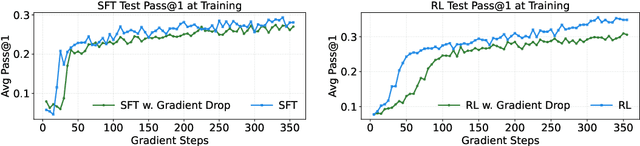
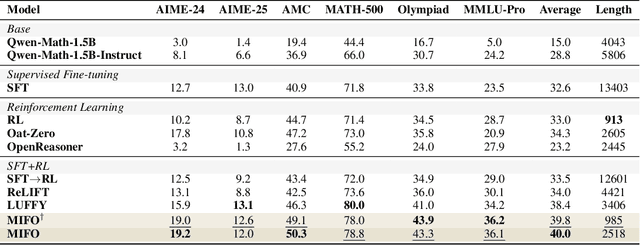
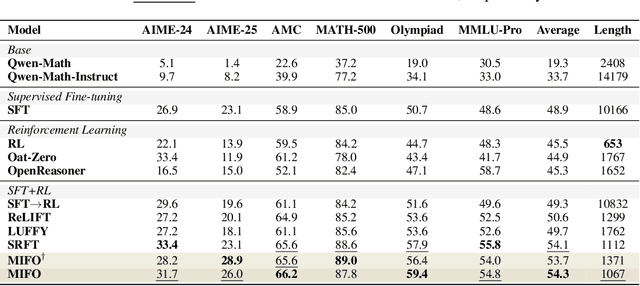

Large Language Models (LLMs) show strong reasoning abilities, often amplified by Chain-of-Thought (CoT) prompting and reinforcement learning (RL). Although RL algorithms can substantially improve reasoning, they struggle to expand reasoning boundaries because they learn from their own reasoning trajectories rather than acquiring external knowledge. Supervised fine-tuning (SFT) offers complementary benefits but typically requires large-scale data and risks overfitting. Recent attempts to combine SFT and RL face three main challenges: data inefficiency, algorithm-specific designs, and catastrophic forgetting. We propose a plug-and-play framework that dynamically integrates SFT into RL by selecting challenging examples for SFT. This approach reduces SFT data requirements and remains agnostic to the choice of RL or SFT algorithm. To mitigate catastrophic forgetting of RL-acquired skills during SFT, we select high-entropy tokens for loss calculation and freeze parameters identified as critical for RL. Our method achieves state-of-the-art (SoTA) reasoning performance using only 1.5% of the SFT data and 20.4% of the RL data used by prior SoTA, providing an efficient and plug-and-play solution for combining SFT and RL in reasoning post-training.
SwiReasoning: Switch-Thinking in Latent and Explicit for Pareto-Superior Reasoning LLMs
Oct 06, 2025Recent work shows that, beyond discrete reasoning through explicit chain-of-thought steps, which are limited by the boundaries of natural languages, large language models (LLMs) can also reason continuously in latent space, allowing richer information per step and thereby improving token efficiency. Despite this promise, latent reasoning still faces two challenges, especially in training-free settings: 1) purely latent reasoning broadens the search distribution by maintaining multiple implicit paths, which diffuses probability mass, introduces noise, and impedes convergence to a single high-confidence solution, thereby hurting accuracy; and 2) overthinking persists even without explicit text, wasting tokens and degrading efficiency. To address these issues, we introduce SwiReasoning, a training-free framework for LLM reasoning which features two key innovations: 1) SwiReasoning dynamically switches between explicit and latent reasoning, guided by block-wise confidence estimated from entropy trends in next-token distributions, to balance exploration and exploitation and promote timely convergence. 2) By limiting the maximum number of thinking-block switches, SwiReasoning curbs overthinking and improves token efficiency across varying problem difficulties. On widely used mathematics and STEM benchmarks, SwiReasoning consistently improves average accuracy by 1.5%-2.8% across reasoning LLMs of different model families and scales. Furthermore, under constrained budgets, SwiReasoning improves average token efficiency by 56%-79%, with larger gains as budgets tighten.
Superficial Self-Improved Reasoners Benefit from Model Merging
Mar 03, 2025As scaled language models (LMs) approach human-level reasoning capabilities, self-improvement emerges as a solution to synthesizing high-quality data corpus. While previous research has identified model collapse as a risk in self-improvement, where model outputs become increasingly deterministic, we discover a more fundamental challenge: the superficial self-improved reasoners phenomenon. In particular, our analysis reveals that even when LMs show improved in-domain (ID) reasoning accuracy, they actually compromise their generalized reasoning capabilities on out-of-domain (OOD) tasks due to memorization rather than genuine. Through a systematic investigation of LM architecture, we discover that during self-improvement, LM weight updates are concentrated in less reasoning-critical layers, leading to superficial learning. To address this, we propose Iterative Model Merging (IMM), a method that strategically combines weights from original and self-improved models to preserve generalization while incorporating genuine reasoning improvements. Our approach effectively mitigates both LM collapse and superficial learning, moving towards more stable self-improving systems.
Can Transformers Reason Logically? A Study in SAT Solving
Oct 09, 2024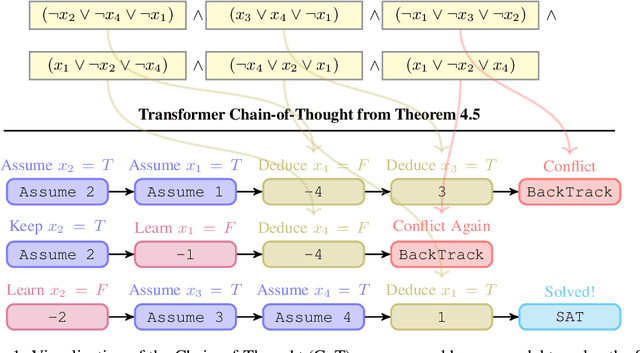
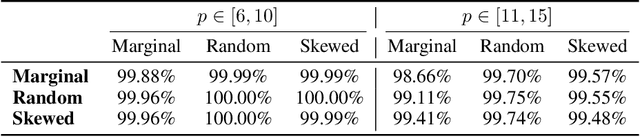
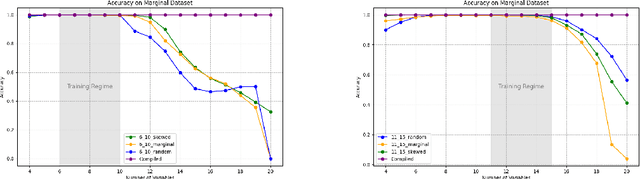
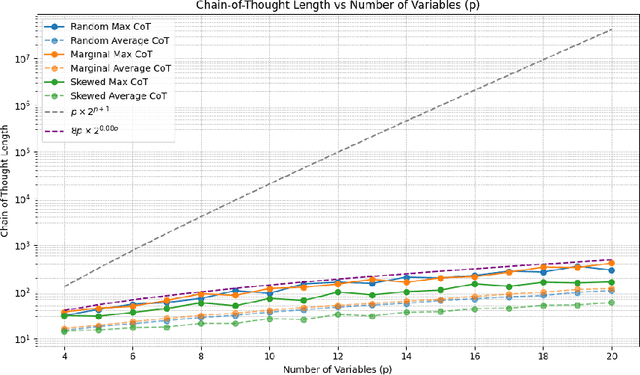
We theoretically and empirically study the logical reasoning capabilities of LLMs in the context of the Boolean satisfiability (SAT) problem. First, we construct a decoder-only Transformer that can solve SAT using backtracking and deduction via Chain-of-Thought (CoT). We prove its correctness by showing trace equivalence to the well-known DPLL SAT-solving algorithm. Second, to support the implementation of this abstract construction, we design a compiler $\texttt{PARAT}$ that takes as input a procedural specification and outputs a transformer model implementing this specification. Third, rather than $\textit{programming}$ a transformer to reason, we evaluate empirically whether it can be $\textit{trained}$ to do so by learning directly from algorithmic traces ("reasoning paths") of the DPLL algorithm.
Optimal Classification-based Anomaly Detection with Neural Networks: Theory and Practice
Sep 13, 2024Anomaly detection is an important problem in many application areas, such as network security. Many deep learning methods for unsupervised anomaly detection produce good empirical performance but lack theoretical guarantees. By casting anomaly detection into a binary classification problem, we establish non-asymptotic upper bounds and a convergence rate on the excess risk on rectified linear unit (ReLU) neural networks trained on synthetic anomalies. Our convergence rate on the excess risk matches the minimax optimal rate in the literature. Furthermore, we provide lower and upper bounds on the number of synthetic anomalies that can attain this optimality. For practical implementation, we relax some conditions to improve the search for the empirical risk minimizer, which leads to competitive performance to other classification-based methods for anomaly detection. Overall, our work provides the first theoretical guarantees of unsupervised neural network-based anomaly detectors and empirical insights on how to design them well.
Non-Robust Features are Not Always Useful in One-Class Classification
Jul 08, 2024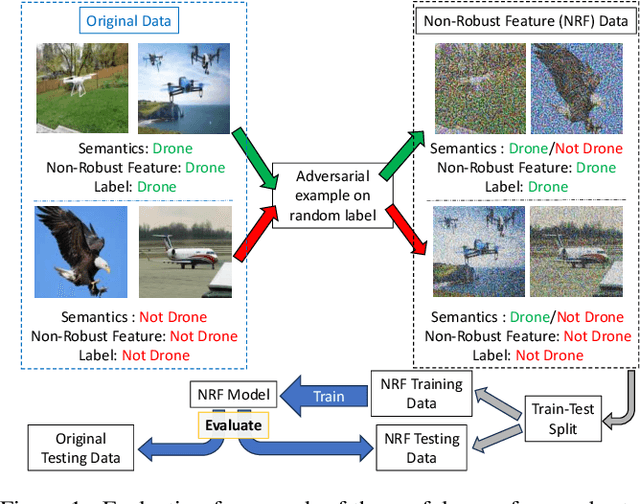

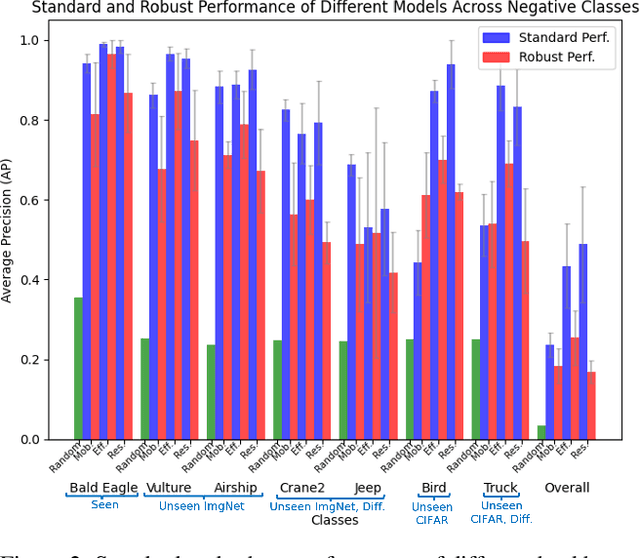
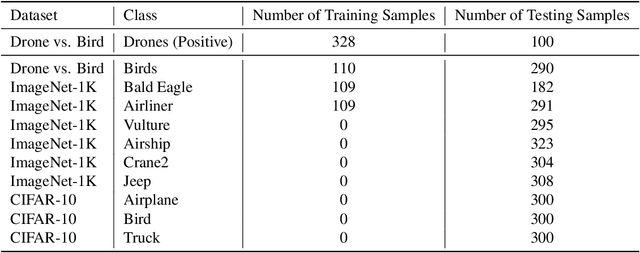
The robustness of machine learning models has been questioned by the existence of adversarial examples. We examine the threat of adversarial examples in practical applications that require lightweight models for one-class classification. Building on Ilyas et al. (2019), we investigate the vulnerability of lightweight one-class classifiers to adversarial attacks and possible reasons for it. Our results show that lightweight one-class classifiers learn features that are not robust (e.g. texture) under stronger attacks. However, unlike in multi-class classification (Ilyas et al., 2019), these non-robust features are not always useful for the one-class task, suggesting that learning these unpredictive and non-robust features is an unwanted consequence of training.